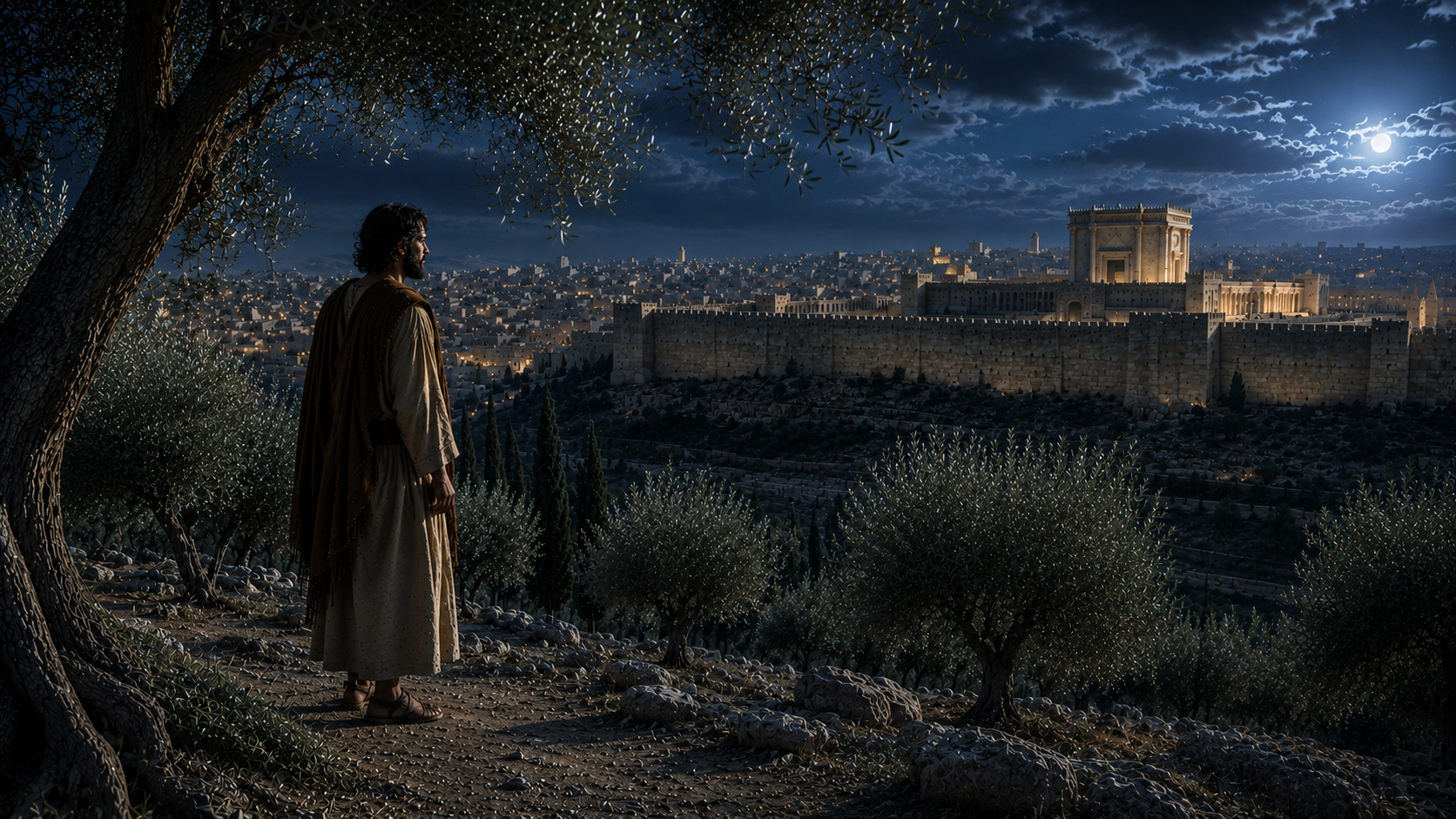
The logic of performative eschatology depended not only upon symbolic action but also upon symbolic space. If sacred history remained active and scriptural patterns could be reentered through prophetic reenactment, then geography itself possessed theological significance. Certain locations occupied a privileged position within Israel’s collective memory because they were associated with decisive moments of covenant, judgment, redemption, and divine intervention. These places were not merely historical reminders. They formed part of the symbolic architecture through which many Jews interpreted both the past and the anticipated future.
The Jordan River provides one of the clearest examples. Within Israel’s sacred memory, the Jordan marked the threshold between wilderness wandering and entry into the promised land. It was associated with Joshua’s crossing, prophetic traditions surrounding Elijah and Elisha, and broader themes of transition, renewal, and divine action. The decision of Yohanan to gather people at the Jordan while proclaiming repentance and approaching judgment was therefore highly significant. The location transformed baptism into more than a ritual act. Participants symbolically repositioned themselves at the boundary of Israel’s story, as though preparing once again for divine intervention and covenant renewal.
The wilderness carried similar significance. Throughout Israel’s scriptures, the wilderness functioned simultaneously as a place of testing, purification, covenant formation, rebellion, and restoration. It was the environment in which Israel encountered God outside established structures of power and security. Prophetic movements that emerged within the wilderness therefore did more than distance themselves from urban authority. They placed themselves within a symbolic landscape already associated with preparation for divine action. The wilderness became a setting in which sacred history could be revisited and renewed.
The same pattern appears in later prophetic movements preserved by Josephus. Theudas chose the Jordan not because it was strategically useful but because it carried scriptural significance. The Egyptian gathered followers on the Mount of Olives because the location already possessed powerful associations with Jerusalem’s future redemption. In both cases, sacred geography functioned as a bridge between scriptural memory and contemporary expectation.
This relationship between place and expectation reveals an important feature of apocalyptic consciousness. Sacred history was not understood as a sequence of disconnected events confined to the past. Rather, biblical narratives created patterns capable of recurring within the present. Locations associated with earlier acts of divine intervention could therefore become natural settings for anticipated future intervention. Geography itself became charged with eschatological significance.
Jerusalem occupied a unique position within this symbolic landscape. More than any other location, it stood at the intersection of covenant, kingship, Temple worship, prophetic expectation, national identity, and future hope. For centuries, Jerusalem had functioned not merely as a political capital but as the symbolic center of Israel’s relationship with God. The city’s significance extended far beyond administration or population. It represented the place where heaven and earth were believed to intersect, where covenantal history converged, and where many expected God’s future purposes to be revealed.
This symbolic status made Jerusalem uniquely important for prophetic movements. If divine intervention was expected to transform Israel and restore the covenantal order, Jerusalem naturally emerged as the most likely stage upon which that transformation would unfold. The city’s sacred significance ensured that actions performed there possessed a meaning unavailable elsewhere. Symbolic acts undertaken in Jerusalem were never merely local events. They carried implications for the entire nation and its future.
The prophets of Israel had reinforced this expectation repeatedly. Isaiah envisioned Jerusalem as the center of future restoration. Ezekiel linked the city’s renewal with divine judgment and national transformation. Zechariah associated Jerusalem and the Mount of Olives with the climactic intervention of God in history. Such traditions contributed to a symbolic geography in which sacred locations functioned not merely as places but as participants within the unfolding drama of redemption.
Within this framework, prophetic action and sacred geography became inseparable. Symbolic acts derived much of their power from the locations in which they occurred, while sacred locations acquired renewed significance through prophetic reenactment. The relationship was mutually reinforcing. Place gave meaning to action, and action reactivated the sacred memory embedded within place.
This helps explain why prophetic movements repeatedly gravitated toward a relatively small number of locations. The Jordan, the wilderness, the Mount of Olives, and Jerusalem were not chosen randomly. They formed part of a symbolic map through which sacred history was interpreted and anticipated. To act within these spaces was to situate oneself within a larger narrative extending from Israel’s past into its expected future.
The significance of sacred geography becomes especially important when we turn to Yeshua. The movement reconstructed in the earliest Galilean traditions appears rooted largely within village life, ethical adaptation, and communal reconstruction. Yet the final phase of Yeshua’s activity unfolds increasingly within locations saturated with prophetic and eschatological significance. The movement shifts from Galilee toward Jerusalem, from village communities toward sacred space, and from ethical reconstruction toward symbolic confrontation.
This transition is unlikely to be accidental. If performative eschatology provides the framework through which prophetic movements understood symbolic action, then sacred geography provides the stage upon which those actions acquired meaning. Throughout the first century, prophetic figures repeatedly gravitated toward locations already saturated with scriptural significance and eschatological expectation. As Yeshua moves toward Jerusalem, his activity becomes increasingly embedded within the same symbolic geography that shaped the wider prophetic imagination of the period.
By the time Yeshua approaches Jerusalem, the movement appears to have entered a different phase altogether. Ethical adaptation remains present, but it increasingly converges with apocalyptic expectation, prophetic symbolism, and sacred reenactment. The result is a form of public action that cannot be understood solely through the categories of wisdom teaching, social reform, or political resistance.
The next question therefore becomes unavoidable: Why would individuals willingly participate in movements that carried such obvious risks?
If prophetic reenactment could provoke suppression, imprisonment, or death, what made such actions appear worthwhile?
Answering that question requires examining the relationship between apocalyptic expectation, divine intervention, suffering, and martyrdom. Only then can we understand why prophetic movements repeatedly persisted despite the overwhelming power of Rome and why confrontation with authority often appeared not as failure but as confirmation that sacred history was unfolding as expected.
→ Continue through Performative Eschatology: Fatalism, Martyrdom, and Divine Intervention Fatalism, Martyrdom, and Divine Intervention